How to Trade in Crypto Trading Simulator
Build a repeatable spot-trading session before the roadmap adds heavier tools.
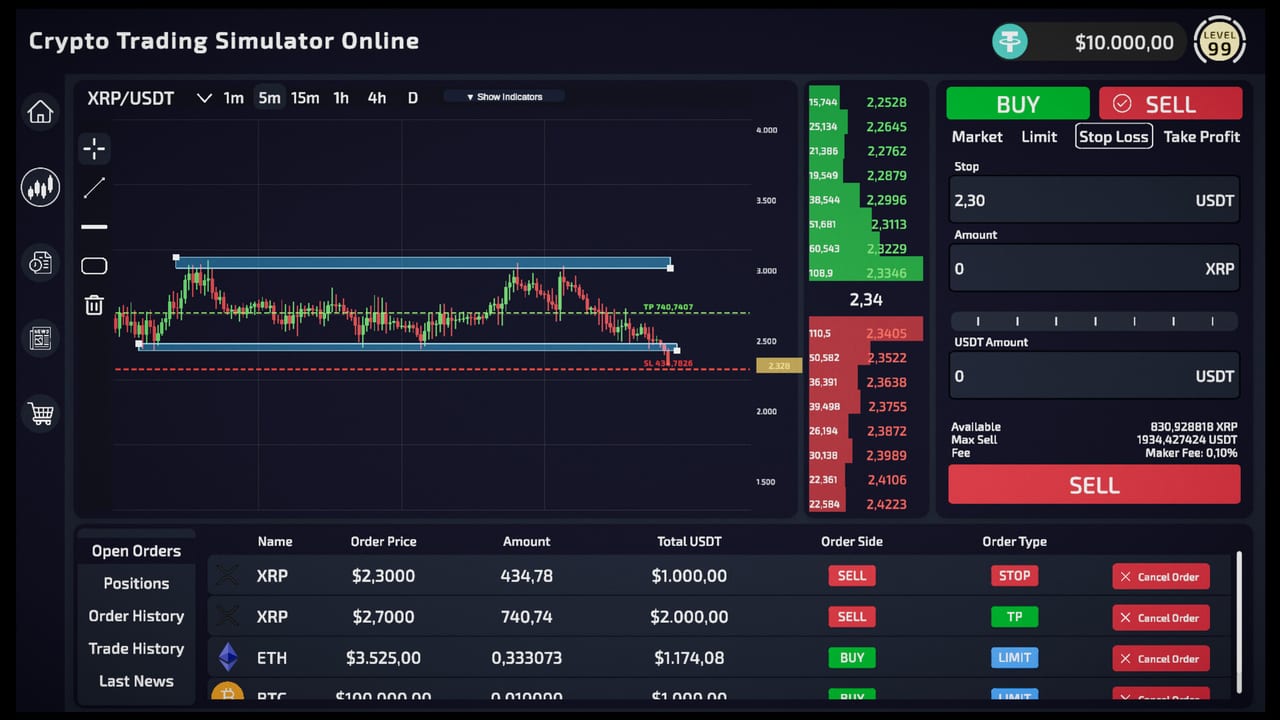
Spot trading is the foundation
In Crypto Trading Simulator Early Access, spot trading is the skill that everything else amplifies later. Bots, deeper margin, and mining may arrive during the Early Access window, but none of them forgive reckless entries. This guide teaches a session framework you can reuse: prepare cash, pick a setup, size the risk, execute, manage, and stop.
If you still need orientation, skim Getting Started first. If chart vocabulary is fuzzy, keep How to Read Charts open nearby.
Before you click buy
- Confirm bills are covered using How to Survive Bills or the Bill Budget Planner.
- Decide a maximum session loss in cash terms, not vibes.
- Run the Position Risk Planner with entry and invalidation prices.
- Check the social feed for active event risk via Social Feed and Events.
- Only then open the order ticket.
Skipping step one is how winning traders still go broke in this game.
Anatomy of a clean spot decision
A clean trade answers five questions in writing:
- Market context: trending, ranging, or event-chaotic?
- Trigger: what candle, band touch, or volume shift authorizes entry?
- Invalidation: what price proves the idea wrong?
- Size: how many units keep the loss inside your risk percent?
- Exit plan: take-profit zone, scale-out rule, or time stop?
If you cannot answer invalidation, you do not have a trade—you have a hope. Hope is expensive when rent is due.
Fees, spreads, and hidden friction
Even when fees start simple, they teach humility. In Early Access, expect dynamic transaction costs to deepen over time. Practically:
- Favor fewer high-quality trades over machine-gun clicking.
- Recalculate break-even after fees before you call a scalp free money.
- Avoid churning around every social-feed ping; the feed is a signal source, not a trade timer.
Session templates
Template A — Survival day
Goal: pay bills and take at most two A-setup trades. Best when cash is tight. Pair with Upgrade Priority later, not today.
Template B — Skill day
Goal: journal eight observed setups and take up to three. Focus on process grades, not PnL screenshots. Use Trading Strategies for playbook names.
Template C — Expansion day
Goal: deploy surplus after bills into a productivity upgrade from Office Upgrades. Still cap risk the same way; wealth does not raise your emotional ceiling automatically.
Managing open positions
While a position is live:
- Watch structure, not ego. If invalidation hits, exit.
- Respect event spikes. An exchange-hack headline can gap through your mental stop—see Risk and Security.
- Do not average down just to be right. Averaging is a strategy only when planned pre-trade with leftover risk budget.
- If hunger, fatigue, or UI stress rises, flatten and sort life systems. The game intentionally blends life pressure with market pressure.
Revenge trading rules
After a loss, mandatory cooling actions:
- Close the order ticket for five minutes.
- Recompute cash floor.
- Write the mistake in one sentence.
- Only re-enter if a fresh setup appears that you would take on a green day.
If you cannot pass rule four, end the session. The market will still be there after sleep—and after Patch Notes if a bug interfered.
What not to assume yet
Do not build your identity around funding-rate arbitrage, extreme leverage liquidations, or fully autonomous farms until those systems are actually in your build. The Early Access Roadmap explains the intended direction. Play the game you have.
Practice drills
- Fee awareness drill: take one tiny round trip solely to observe cost drag.
- Invalidation drill: mark a level, enter small, exit mechanically when tagged.
- Event pause drill: when a major feed event fires, wait one full information cycle before clicking.
- Bill-first drill: begin two sessions by paying or reserving costs before charts.
Link these habits to progress systems
Achievements like bankroll milestones and coin believer badges are optional quests. Chase them with planned risk, not lottery tickets. Coin-specific goals pair well with Coin Focus once your process is stable.
Closing checklist
You are trading well in Crypto Trading Simulator when every entry has a written invalidation, bills never depend on the next candle, social FOMO is filtered, upgrades are bought from surplus, and you can stop without needing a miracle trade.
Continue to How to Read Charts for indicator detail, or jump to Trading Strategies for named playbooks you can rehearse.
Frequently Asked Questions
Quick answers to the most common questions.
Is leverage required to progress?
No. Early Access focuses on spot trading first. Treat deeper margin as upcoming and follow [Risk and Security](/guides/risk-and-security/) before using any leverage tools that appear.
How large should my first trades be?
Small enough that a full stop feels boring. Use the [Position Risk Planner](/tools/position-risk-planner/) and keep a bill buffer from the [Bill Budget Planner](/tools/bill-budget-planner/).
What should I read next?
Open [How to Read Charts](/guides/how-to-read-charts/) for indicators, then [Social Feed and Events](/guides/social-feed-events/) so headlines do not hijack your plan.